Chinese Trainer is a Mandarin learning app that I am building on my own.
After a summer school in Beijing, I came back wanting to keep studying Chinese for real. I tried the usual apps, and they were great at keeping a streak alive, but they left me with the same problem: I did not know what to study next, I forgot words a few days later, and I still froze when I had to write or say a sentence. I wanted something closer to a serious HSK path, not another mini-game. I could not find a tool that mixed vocabulary, review, practice and a tutor in the same place, so I started building it.
The live product is at chinesetrainer.com.
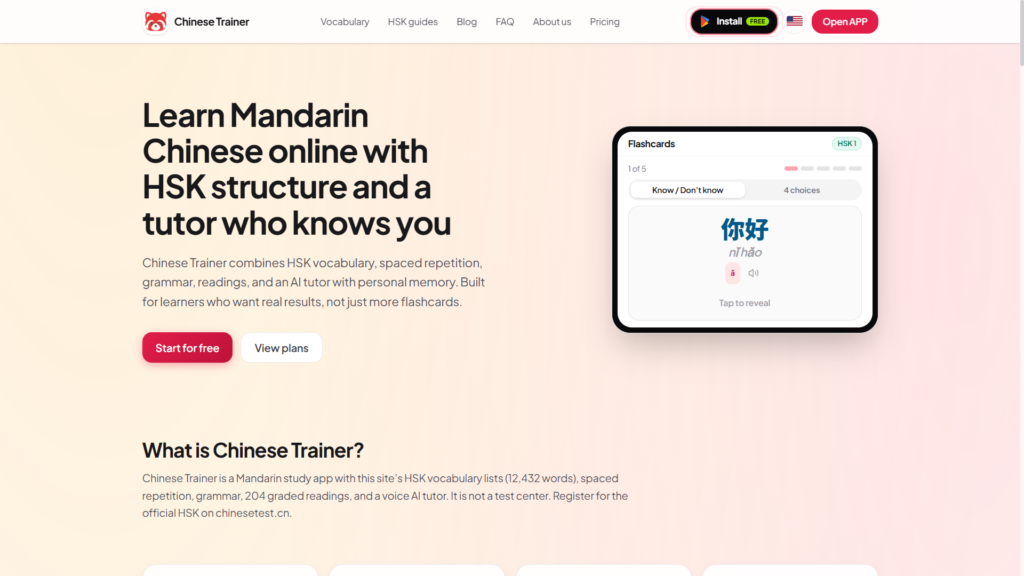
How it started
This project sits in a very personal place. I am still an Aerospace Engineering student at UPM, I am still learning Chinese, and I am still the first user of the app. Chinese Trainer is the product I wished existed when I left Beijing: a clear level, a review queue that brings hard words back on time, and practice that goes beyond tapping the right translation.
It is also the most complete product I have shipped so far. QRUDU taught me how to build a SaaS with a partner. Space Known taught me how to write and grow a site. Chinese Trainer is where those two threads meet: a full learning platform, with payments, accounts, content, SEO, a blog, and a mobile app.
How it works
The idea is simple, even if the product is not.
You create an account (Google login is enough), you pick your HSK level or take a short placement, and the app gives you a daily path. That path is not a random playlist of games. Vocabulary, grammar, flashcards, listening, writing and readings all sit on the same HSK band, so you are not mixing HSK 1 with HSK 4 because an algorithm wanted to keep you busy.
Then spaced repetition does the unglamorous part. Today you see the cards that are about to fall off, not an infinite deck you have to organise yourself. If you only chase new lessons, the review queue tells you. That is the difference between feeling productive and actually keeping the language.
On top of that there is practice: tones, dictation, sentence order, character writing, listening, and graded readings. The AI tutor is not the home screen. It is there when a sentence goes wrong and you need a correction at your level, not a generic chat that forgets whether you are HSK 1 or HSK 4.
A free account covers HSK 1–2 with daily limits, so anyone can try the method without paying. Paid plans start at €5 per month, with a 7-day trial, and Premium costs more because real model usage has a real cost. I say that openly instead of hiding it behind a vague “Pro” badge.
What is inside
I could list icons, but that would not explain the scale. Some of the pieces that are actually live:
- 12,432 HSK-tagged words, with hanzi, pinyin, gloss, examples and audio. Free covers HSK 1–2 with no word cap. Standard and Premium open HSK 1–7+.
- Spaced-repetition flashcards, plus a review queue that pulls due work from several modules.
- Grammar and lessons sitting next to vocabulary at the same level, so a particle like 了 is not just a card, it is a sentence.
- Multimodal practice: matching, sentence scramble, writing, tones, listening, dictation.
- 204 graded readings (dialogues, stories, short texts), cut by level, with pinyin and gloss when needed.
- HSK-style mocks, with an error list that feeds back into practice instead of dying as a one-day score.
- AI tutor by text, and on Premium by voice, with memory of weak points. Free is 3 messages per day. Standard is 20. Premium is the serious use, because that is what the models actually cost.
- Documents / OCR, so a menu, an email or a sign can be tapped and saved into flashcards.
- Progress that tries to mean something: streak, XP, skill stats, daily plan. The streak is a reminder to open the queue, not the trophy.
- A public marketing site in Spanish and English, with HSK guides, vocabulary hubs, comparisons, a blog, a newsletter, and honest legal pages.
- The same account on the web and on Android. iOS is still in development.
Chinese Trainer is not a live teacher, not a dictionary to replace Pleco, and not the official exam. You still register for the HSK on chinesetest.cn. The app tells you what to study today. It does not sit next to you in the room.
Building it
Unlike QRUDU, this one is a solo project. I design the product, write the content, ship the code, handle payments, and talk to users. That is slower in some weeks and much more complete in others, because every decision stays in one head.
To get it to production I had to go far beyond “a React page”. The stack I used includes:
- React + Next.js (App Router) for the web app and the marketing site
- TypeScript
- NeonDB, connected through Prisma, to manage users, progress, vocabulary and content
- NextAuth + Google APIs for secure login (the same account then works on the phone)
- Stripe for subscriptions, the 7-day trial, and the customer portal so people can cancel without emailing me
- OpenAI for the tutor (text, voice, generated readings on Premium)
- Tailwind CSS for the interface
- GitHub to keep the work versioned
- Render to host the web app
- Resend for transactional email
- Kit for the newsletter and lead magnet
- Expo + React Native for the Android app, with EAS builds and Google Play
- Firebase Analytics on mobile
- And a long list of smaller pieces: PWA, hanzi writing, speech, web-push, bilingual routing, schema / SEO, a public changelog and roadmap
The content side is as large as the code. Vocabulary, grammar, readings and phrases are not a dump of random lists. They are curated, tagged by HSK, imported, and then reused inside flashcards, exams and the tutor. That took as much care as the features.
The Android app
A learning habit that only lives on a laptop dies during the week. That is why I built a native Android app that uses the same Google account as the browser. Five minutes of SRS on the metro is the point. Progress, HSK level and streak sync. You do not start over.
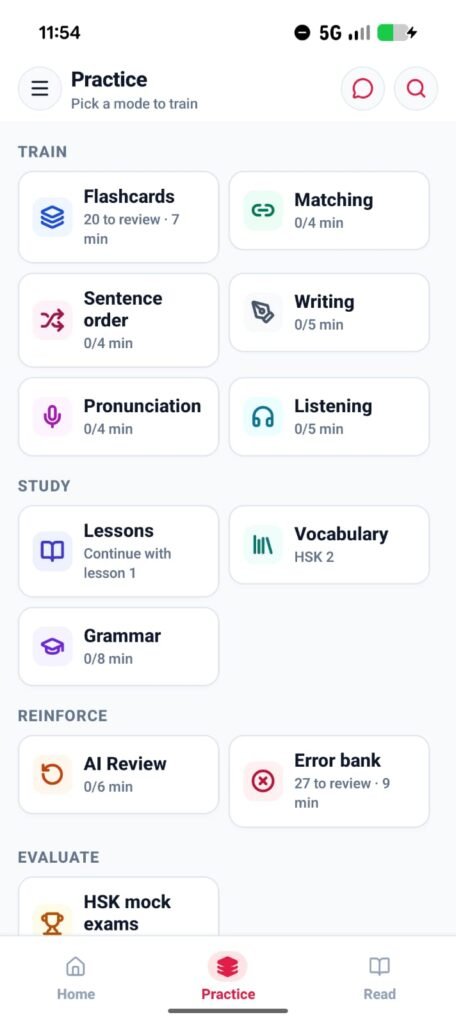
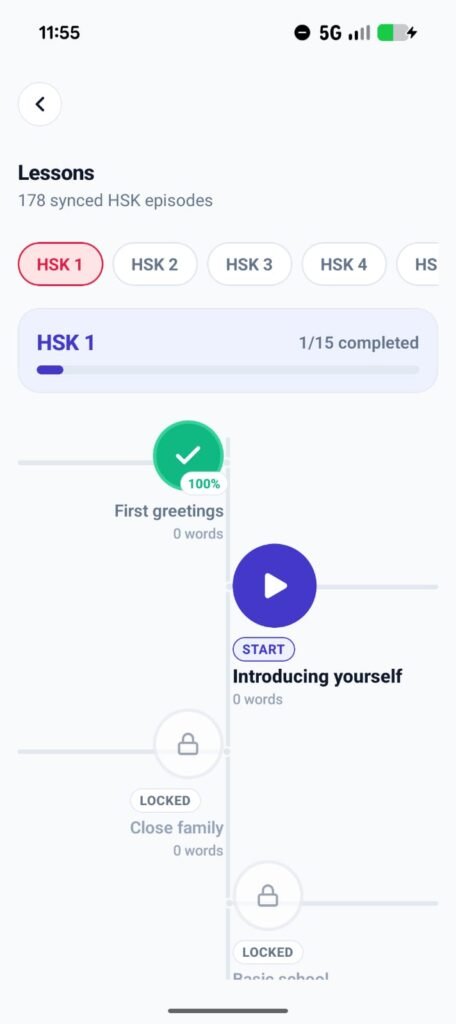
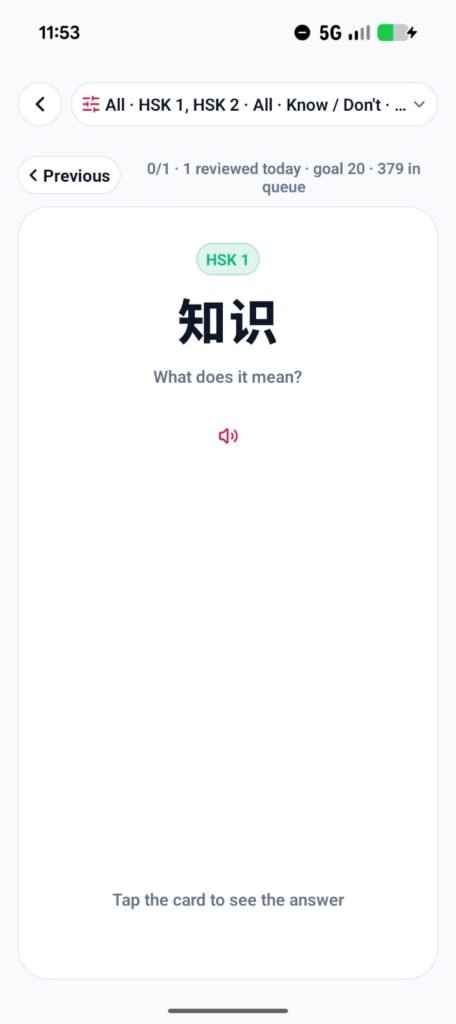
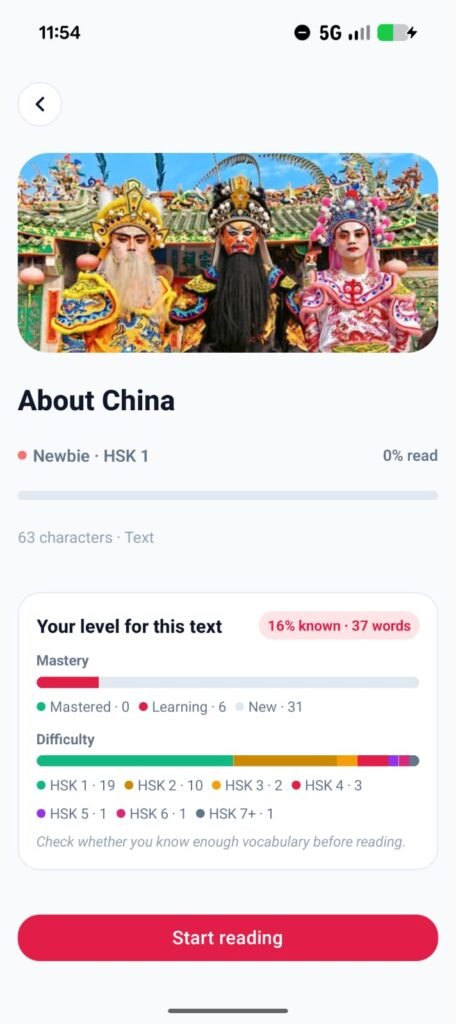
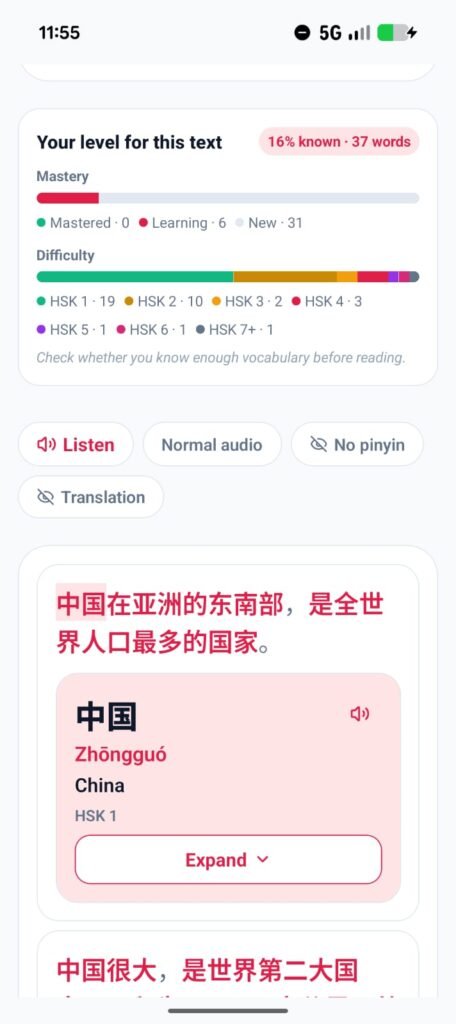
iOS is next. Until then, people can study in the browser or install the android app directly at the Play Store.
More than coding
This project forced me to learn skills I did not have when I started:
- Product. What to build next, what to leave out, and how to say no to a feature that looks impressive but does not help someone study today.
- Pedagogy. HSK is not a sticker. If the path, the review and the practice do not talk to each other, you just built another busy app.
- SEO and writing. Like Space Known, the public site has to rank and explain. I write the blog and the guides myself, in Spanish and English, instead of generating a pile of thin pages.
- Business basics. Pricing, trials, Stripe, support, a delete-account page, a public roadmap. If someone pays, they should be able to leave without a trap.
- Shipping alone. Design, backend, mobile, content and marketing in the same week. Some days that is exciting. Some days it is just discipline, which is the same bet I already made in engineering school.
A screenshot will not show the size of this. Neither will a line count. If you want to understand it, the honest way is to open the actual product and click around: the free HSK 1–2 path, the vocabulary lists, the blog, the Android page, the pricing. That is the real demo.